Top 10 Sleeveless Puffer Jackets for Wholesale Buyers

Time:2026-11-18 Author:Ethan
0%

Wholesale buyers need more than a good-looking sample. A Sleeveless Puffer Jacket must earn its place across real orders, from fitting-room checks to repeat shipments. Before choosing a supplier, examine the shell fabric, stitching, insulation, zipper action, pocket depth, and size grading. Feel the fabric under your fingertips. Open and close the zipper several times. Small details can become costly when hundreds of units arrive. They can also be easy to miss in a polished product photo.

Outdoor-industry pioneer Yvon Chouinard is widely associated with the principle, “The more you know, the less you need.” It is not a comment specifically about sleeveless puffers, but it offers wholesale buyers a useful reminder: define the product before chasing options. This guide compares ten jackets through practical buying questions, including warmth, construction, available colors, customization, and likely customer use. Ask for clear specifications and a physical sample where possible. Check whether the quoted features match what arrives. A low unit price can look attractive on paper. Not always in the warehouse. No shortlist can predict every fit issue or delivery delay, and that deserves honest attention. Use these picks as a starting point, not a substitute for supplier checks and wearer feedback.
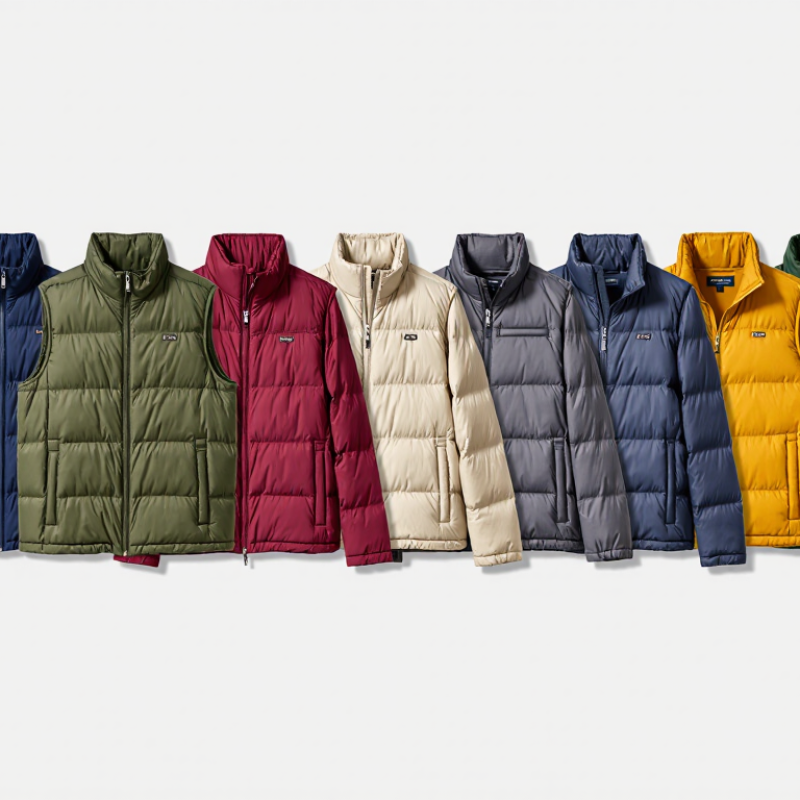
Top 10 Sleeveless Puffer Jackets for Wholesale Buyers

What Defines a Sleeveless Puffer Jacket in Wholesale Apparel?

A sleeveless puffer jacket is an insulated torso layer with open armholes, not simply a vest with extra padding. Its shell protects the fill, while the lining helps the garment slide over sweaters. Quilted channels or sewn-through seams hold insulation in place; wider baffles can create a loftier look, but may feel bulky under a coat. For wholesale buyers, define fill type, fill weight, shell composition, lining, fit, and intended temperature range before comparing samples. Textile Exchange’s Materials Market Report 2024 estimates that global fiber production reached 124 million tonnes in 2023, with polyester accounting for 57%. This is useful context when specifying shell or synthetic fill, but it does not prove that every polyester jacket performs alike.

Construction details matter on the rack. Check whether armholes bind comfortably over a knit layer, whether the zipper guard sits flat, and whether pockets remain usable when the jacket is zipped. Ask suppliers for material and fill documentation, plus wash-test results where available. The Ellen MacArthur Foundation’s 2017 report estimated that less than 1% of clothing material was recycled into new clothing. That makes clear fiber identification worth discussing, especially for recycled-content claims. Still, a neat spec sheet can miss real fit problems. Sample garments on different body shapes before placing a bulk order; one sample is rarely enough.

How to Evaluate Insulation, Materials, Fit, and Construction

For wholesale buyers, insulation should match the jacket’s intended use, not just its listed weight. Ask whether the fill is down or synthetic, and request consistent specifications across production lots. Synthetic fill can retain more warmth when damp, while down often packs smaller. Neither is automatically better. Check samples after compression and recovery; a jacket that looks full on a hanger may flatten in a carton.

Feel the fabric closely. A tightly woven shell can help limit wind and abrasion, while a soft lining improves comfort over shirts and sweaters. Check the fit on several body types, not only a fit model. Armholes should allow reaching without pulling, and the hem should sit comfortably over layers. Too roomy looks bulky. Too close limits movement. Sizing can be frustrating.

Inspect the construction in bright light. Look for even quilting, secure seams, smooth zippers, and filled channels without obvious gaps. Run a hand over the panels to find thin spots, then test closures repeatedly. Ask suppliers how they check measurements and defects during production, and compare those checks with your own sample review. One sample is useful, but it cannot reveal every batch variation. Keep written records of approved materials, measurements, and construction details before placing a larger order.

Top 10 Sleeveless Puffer Jacket Styles for Wholesale Buyers

Top 10 Sleeveless Puffer Jackets for Wholesale Buyers
Top 10 Sleeveless Puffer Jacket Styles for Wholesale Buyers

A useful wholesale range balances familiar shapes with clear differences. Consider classic horizontal quilting, diamond quilting, a clean matte finish, and a light sheen. Cropped and longline cuts serve different layering needs. Hooded styles add coverage, while stand collars create a neater profile. Reversible designs offer two looks, and packable vests suit travel-focused shoppers. A workwear-inspired version, with sturdy pockets and reinforced seams, can round out the selection. Small details matter.

Before placing a bulk order, compare samples for fill distribution, zipper movement, and stitching around armholes. Ask suppliers for garment measurements and fabric details, then check them against your target customer and intended season. A longline vest may photograph well but feel restrictive over a thick sweater. I have seen buyers favor dramatic styling, then reconsider after checking movement and fit. Trends are useful, but they do not guarantee repeat sales. Requesting a size run can reveal issues that one sample hides.

Tips: Test each style over a midweight knit. Check pocket depth with a phone, and confirm whether the hem stays level when worn open. Keep one sample for fit review.

How to Compare Suppliers, Pricing, and Minimum Order Quantities

Top 10 Sleeveless Puffer Jackets for Wholesale Buyers

How to Compare Suppliers, Pricing, and Minimum Order Quantities

Compare suppliers using the same jacket specification. List shell fabric, insulation weight, lining, zipper type, pocket count, and size range. Then request itemized quotes at several order quantities. A low unit price may hide setup fees, sample charges, or costly packaging. Ask whether the quoted price includes labeling and freight. Confirm production and sample timelines in writing. Small details matter.

The Textile Exchange Materials Market Report 2024 estimates that polyester accounted for about 57% of global fiber production in 2023. Since polyester is common in puffer shells and insulation, ask suppliers to state fiber composition and provide supporting material documentation. Compare like with like: recycled content, fabric weight, stitching, and inspection standards can change the price. Check sample seams and quilting in person when possible. A spreadsheet can still miss the feel of a thin lining.

Tips: Request the MOQ per color and size, not just per style. Ask for a size-run breakdown before paying a deposit. Compare the landed cost, including freight and duties, rather than the factory price alone. Keep one approved sample as your reference. It takes extra time, but vague specifications often cause avoidable surprises.

Top 10 Sleeveless Puffer Jackets: Indicative Wholesale Price Ranges

Indicative FOB planning ranges in USD per unit for common jacket specifications—not verified supplier quotes or fixed market prices. Actual costs vary by fabric, insulation, order volume, customization, and shipping terms.

Compare like-for-like samples and request written quotes that specify fabric, fill, size range, customization, and Incoterms. Minimum order quantities are supplier- and specification-dependent; stock styles may have lower minimums, while custom colors or construction can require substantially larger orders. Confirm MOQ and pricing directly before purchasing.

What to Check Before Ordering and Reselling Bulk Stock

Top 10 Sleeveless Puffer Jackets for Wholesale Buyers

Before placing a bulk order, inspect a sample in person. Check whether the insulation springs back after compression and whether the shell feels sturdy without being stiff. Examine the armhole binding, zipper track, and seams, especially where pockets meet the body. These details can affect comfort and durability. Ask for a size chart with garment measurements, not just generic labels. Fit may vary between styles. A sample can look convincing, yet still differ from the production run, so confirm how the bulk goods will be checked.

Compare the full cost, including shipping, packaging, and any expected defect allowance. Request clear details on minimum quantities, available colors, carton counts, and production timing. Consider whether the colors and size range suit your customers; a low unit price is less useful if popular sizes sell out first. Review a packed garment too. Deep creases may take time to release, and excessive compression can make the jacket appear flat on arrival.

Tips: Wash or spot-test the sample according to its care label. Photograph stitching and measurements for later comparison. Ask the supplier to confirm these specifications in writing, then inspect a few units from each delivered carton. Small checks matter. Bulk buying still involves uncertainty, so leave room in your margin for slow-moving colors or fit issues.

Top 10 Sleeveless Puffer Jackets for Wholesale Buyers - What to Check Before Ordering and Reselling Bulk Stock

A practical comparison of jacket types and buying checks. Specifications shown are common options, not universal standards; confirm final materials, measurements, test reports, and pricing with the supplier before placing an order.

Priority Jacket Type Typical Construction Options Potential Customer / Use What to Check Before Ordering Resale Considerations
1 Classic quilted vest Polyester or nylon shell with polyester fill; horizontal or diamond quilting. Everyday layering and broad seasonal retail. Check quilting consistency, fill distribution, zipper operation, lining, and garment measurements across the size range. A versatile core style; compare samples in multiple colors because shell shade can vary between production lots.
2 Lightweight packable vest Lightweight woven shell, commonly nylon or polyester, with synthetic fill or down; may include a storage pouch. Travel, commuting, and transitional-weather layering. Test the pouch and pack-down process; inspect fabric snagging, seam quality, zipper strength, and recovery after unpacking. Low bulk can help with shipping and storage. Do not describe it as waterproof unless supported by construction and test evidence.
3 Hooded puffer vest Synthetic or down insulation; fixed or detachable hood; woven outer shell. Customers wanting added coverage for cool, dry conditions. Check hood fit, drawcord safety and finishing, attachment points, collar comfort, and whether the hood is included in the quoted specification. Confirm product photos and packing lists match the supplied hood configuration.
4 Stand-collar vest Polyester or nylon shell with synthetic fill; high collar and full-front closure. Work-to-weekend layering and customers who prefer a simple neckline. Check collar height and shape, zipper guard, neckline comfort, armhole binding, and stitching at stress points. A straightforward silhouette; verify fit over a sweater or sweatshirt, not only over a thin sample layer.
5 Recycled-polyester shell vest Shell fabric made with recycled polyester, often paired with polyester fill; exact recycled content varies. Retailers seeking products with documented recycled-material claims. Request transaction-specific documentation for recycled content and confirm which components it covers; check labels and claim wording. Use environmental claims only when supported by valid documentation and applicable local rules.
6 Down-filled vest Down insulation in a woven shell; fill power and down-to-feather composition should be specified by the supplier. Customers prioritizing warmth-to-weight performance. Verify fill composition, fill weight, fill-power test documentation, leakage, and animal-welfare or traceability claims where applicable. Down specifications affect product claims and cost; ensure care labels and fiber-content labeling meet destination-market requirements.
7 Workwear-inspired vest More durable woven shell, synthetic insulation, reinforced details, and practical pockets. Outdoor tasks, trade settings, and casual utility styling. Inspect pocket reinforcement, seam construction, zipper and snap security, fabric abrasion performance, and ease of movement. Avoid safety or protective-workwear claims unless the product has been assessed against relevant requirements.
8 Extended-size vest Standard shell and insulation options graded to a broader size range; pattern and grading vary by supplier. Retailers serving customers who need a wider range of sizes. Request a complete measurement chart, review grading between sizes, and fit-test more than one size before approving bulk production. Plan size ratios from your own sales data; confirm that larger sizes retain comfortable armholes and balanced proportions.
9 Longline puffer vest Extended-length quilted shell with synthetic or down insulation; may include side vents or a two-way zipper. Customers seeking additional coverage for casual cold-weather layering. Check back length by size, sitting and walking comfort, vent construction, zipper length, and packed garment dimensions. Longer garments use more material and may require different freight and storage planning than short vests.
10 Reversible puffer vest Two wearable outer faces with finished seams and closures designed to work from either side. Customers looking for two styling options in one garment. Inspect both faces, seam finishing, pocket access on each side, zipper reversibility, and color transfer between fabrics. Confirm care instructions and product images clearly show both sides; extra finishing can affect unit cost.

Bulk-order checklist: Approve a pre-production sample; confirm fabric and fill composition, color, size tolerances, care and fiber-content labels, carton packing, inspection criteria, delivery schedule, and defect-remedy terms in writing. Any water-repellency, recycled-content, down, or performance claim should be supported by appropriate documentation for the product being ordered.

FAQS

What is a sleeveless puffer jacket?

It is an insulated torso layer with open armholes. Quilted channels help hold the fill in place. It can layer over sweaters.

Which insulation should wholesale buyers choose?

Match the fill to the jacket’s intended use and temperature range. Synthetic fill may retain more warmth when damp. Down often packs smaller. Neither is automatically better.

What materials and details should buyers specify?

Record the shell, lining, fill type, and fill weight. Request material documentation and wash-test results when available. A neat specification sheet can still miss fit problems.

How can buyers assess fit?

Try samples on different body shapes and over knitwear. Check arm movement, hem comfort, and armhole binding. One fit model is not enough.

Which construction details need inspection?

Look for even quilting, secure seams, smooth zippers, and filled channels. Test pockets with the jacket zipped. Inspect under bright light.

Is one sample enough before a bulk order?

No. Test how the insulation recovers after compression, but remember one sample cannot reveal every production variation. Confirm specifications in writing.

What costs and order details should buyers compare?

Include shipping, packaging, minimum quantities, carton counts, colors, and production timing. Allow room for defects and slow-selling sizes. A low unit price can mislead.

How can buyers review delivered stock?

Photograph sample measurements and stitching for comparison. Inspect a few units from each carton. Check packed garments too; heavy compression may leave them flat or creased. Some creases may take time to release.

Conclusion

This guide helps wholesale buyers understand what makes a Sleeveless Puffer Jacket a practical addition to an apparel range, from its insulated, sleeveless design to the materials and construction that affect warmth, durability, and comfort. It explains how to assess insulation quality, fabric, stitching, fit, sizing, and finishing details, then compares ten versatile jacket styles for different customer preferences and retail needs.

Buyers will also find a clear framework for comparing suppliers, prices, and minimum order quantities. Before placing an order or reselling bulk stock, they should review product specifications, request samples when possible, confirm size and color availability, and check packaging and quality-control procedures. Careful evaluation can help businesses select dependable products, manage inventory expectations, and offer customers well-made sleeveless outerwear suited to their market.


Ethan

Ethan

Ethan is a seasoned marketing professional with a deep expertise in our company's innovative product line. With a passion for sharing knowledge and insights, he takes the lead in regularly updating our corporate blog, where he explores industry trends, product features, and effective marketing......