Buying a Fleece Jacket for international markets requires more than checking color and price. Fabric weight, warmth, fit, stitching, and supplier consistency can change the final result. A jacket that feels soft in a showroom may pill after repeated washing. Small details matter.
This guide presents ten practical buying tips for global buyers. It considers material quality, fleece density, recycled content, zipper performance, seam strength, sizing, labeling, packaging, and sample approval. These points reflect common sourcing checks used by apparel professionals and experienced purchasing teams. They also support clearer communication between buyers, manufacturers, and quality inspectors.
Start with the intended market. A lightweight jacket may suit mild coastal weather, while a heavier design may serve colder regions. Check the fabric against your target climate, customer habits, and retail position. Ask suppliers for fabric specifications, test reports, and production references. Do not rely on attractive photographs alone.
Samples can mislead. They are often made with extra care. Production units may differ. Require a written specification before placing a larger order, and compare random production pieces with the approved sample. Check chest measurements, sleeve length, hem tension, and zipper alignment by hand. A small measuring error can create costly returns.
No sourcing process is perfect. Forecasts change, and supplier explanations may be incomplete. Keep records, question unusual claims, and allow time for independent inspection. Reliable decisions come from evidence, not promises. These ten tips will help global buyers reduce avoidable risks and choose a Fleece Jacket that performs beyond the first impression.
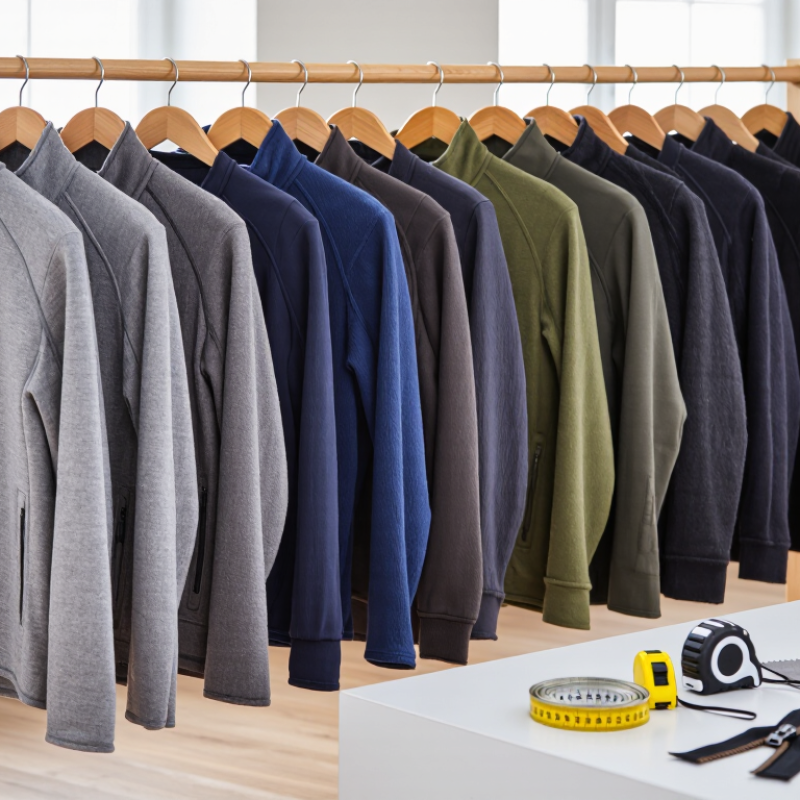
Define Your Fleece Jacket Purpose and Intended Use
A fleece jacket should match the activity, climate, and wearing layer. A commuter may need a light, low-bulk fleece for indoor travel. A mountain user needs stronger insulation, quick drying, and room for base layers. A factory worker may value abrasion resistance and easy washing more than softness. Purpose comes before color.
Tip: Write the use case in one sentence. For example, “This jacket is for damp, windy hikes at 5–15°C.” That sentence guides fabric weight, fit, pockets, and hem design. I once chose a thick fleece for mild travel weather. It felt comfortable indoors, but became sweaty outdoors. The mistake was simple: warmth was judged without considering movement.
Textile Exchange’s Materials Market Report 2024 estimates that polyester represented 57% of global fiber production in 2023, reaching about 124 million tonnes. This explains fleece’s wide availability, but it does not guarantee suitable performance. Ask suppliers for fabric weight, fiber composition, pilling results, drying performance, and test conditions. For active use, check whether stretch panels restrict movement. For daily use, inspect pocket placement and zipper durability. Outdoor Industry Association participation data also shows sustained demand for outdoor activities, yet buyers should avoid copying outdoor specifications blindly. A casual travel jacket does not need expedition-level construction. It may need better comfort. Frequently overlooked.
| No. | Buying Tip | Typical Intended Use | Recommended Product Specifications | Why It Matters |
|---|---|---|---|---|
| 1 | Define the primary purpose | Daily wear, outdoor recreation, workwear, travel, or layering | Select the design according to activity level, climate, movement, and appearance requirements | A jacket designed for light daily use may not provide enough durability or weather protection for demanding outdoor activities. |
| 2 | Match the fleece weight to the climate | Mild weather, cool transitional seasons, or cold conditions | Lightweight: approximately 100–150 g/m²; midweight: 200–250 g/m²; heavyweight: 300 g/m² or more | Fabric weight generally affects warmth, bulk, drying time, and suitability for layering. |
| 3 | Choose the appropriate fabric structure | Casual wear, active use, uniforms, or technical layering | Options include anti-pilling fleece, grid fleece, bonded fleece, sherpa fleece, or smooth-faced fleece | Different structures influence warmth, surface appearance, abrasion resistance, moisture management, and packability. |
| 4 | Consider moisture and wind exposure | Hiking, commuting, travel, or outdoor work | Use a wind-resistant outer face, tightly knitted fabric, or a fleece-and-shell construction when needed | Standard fleece provides warmth but is not fully windproof or waterproof; a suitable outer layer may be necessary. |
| 5 | Check mobility and fit requirements | Sports, climbing, cycling, manual work, or relaxed daily wear | Look for articulated sleeves, stretch panels, underarm gussets, and enough room for base layers | The correct fit improves comfort and prevents restricted movement during active use. |
| 6 | Select practical closure and pocket features | Travel, workwear, commuting, or outdoor activities | Consider full-length zippers, secure pockets, adjustable hems, thumbholes, and high collars | Functional details can improve heat retention, storage, ventilation, and ease of use. |
| 7 | Evaluate durability for the operating environment | Industrial work, uniforms, frequent travel, or recreational use | Check fabric abrasion resistance, seam construction, zipper quality, reinforcement panels, and colorfastness | Higher-wear applications require stronger construction to reduce replacement frequency and product returns. |
| 8 | Confirm care and maintenance requirements | Retail collections, uniforms, hospitality, and everyday apparel | Prefer machine-washable materials with clear care instructions; avoid high heat that can damage synthetic fibers | Simple care improves user satisfaction and helps preserve fleece softness and shape. |
| 9 | Review sizing and regional fit standards | International retail, e-commerce, uniforms, or wholesale distribution | Request a detailed measurement chart covering chest, shoulder, sleeve, body length, and tolerance | Sizing systems vary by market, so verified garment measurements help reduce fit-related returns. |
| 10 | Validate samples before placing a large order | Wholesale purchasing, private-label collections, and seasonal programs | Test warmth, pilling, shrinkage, seam strength, colorfastness, fit, and performance after washing | Sample evaluation confirms whether the jacket meets the intended use and quality expectations before production commitment. |
Microfleece usually weighs 100–200 gsm and dries quickly. Midweight fleece often weighs 200–300 gsm for daily outdoor use. High-loft fleece traps more air but may pack poorly.
No. Dense fleece can block wind better than lofty fleece. Warmth depends on structure, fit, air movement, and layering. “Heavier means warmer” is too simple.
Request GSM, fiber composition, air permeability, pilling results, and dimensional stability. Also inspect seam strength, zipper protection, surface brushing, and colorfastness. A soft sample can still fail after washing.
No. Recycled content may reduce dependence on new raw materials. It does not guarantee better warmth, durability, or softness. Ask for content verification and test reports.
Measure chest, sleeve length, and back length on the actual garment. Do not rely only on S, M, or L labels. Those labels vary across markets.
Allow about 5–8 centimeters of chest ease for a light base layer. Add more space for a sweater underneath. The jacket should not pull across the shoulders.
Try the jacket over a moisture-wicking shirt and a medium sweater. Reach forward with arms slightly bent. The armholes should remain comfortable.
Quick-drying microfleece may suit warm, wet markets. Maximum loft is not always necessary. A loose hem can leak heat, while a tight collar may restrict layering.
Request samples and compare measurements across several sizes. Inspect movement, sleeves, seams, and washing performance. I once trusted a familiar size label. The sleeves were short.
Buying the right Fleece Jacket requires more than choosing a color or appearance. Global buyers should first define the intended use, such as outdoor work, travel, casual wear, or cold-weather layering. Compare fleece types, fabric weights, warmth levels, breathability, moisture management, durability, and drying performance to match the jacket with its working environment. Fit is equally important, so check measurement charts, regional sizing standards, sleeve length, mobility, and compatibility with base layers or outer shells.
Before placing an order, evaluate stitching, zippers, pockets, cuffs, collar construction, and overall finishing. Ask suppliers about material composition, quality-control procedures, relevant certifications, production capacity, and sample approval processes. Buyers should also confirm unit prices, minimum order quantities, customization choices, packaging, lead times, shipping terms, and import documentation. A clear agreement on payment, inspection, delivery responsibilities, and compliance requirements can reduce unexpected costs and support a more reliable international purchasing process.

 Zhongda Wincome