Choosing the best long puffer jacket means balancing warmth, comfort, and everyday practicality. A Women's Long Puffer Jacket can shield your hips and thighs from cold wind, but extra length alone does not guarantee comfort. Check how the coat feels when you walk, sit, and reach overhead. Small details matter.
Start with insulation and weather protection. Down is light and compressible, while synthetic fill can retain warmth in damp conditions and is often easier to care for. Check the product label for fill details rather than judging warmth by appearance. Loft can be misleading. A roomy, thick-looking coat may still feel cold if wind passes through its shell. Look for a secure zipper, adjustable cuffs, and a hood that stays in place without blocking your view.
Fit should leave space for a sweater without pulling across the shoulders. Try the jacket with the layers you expect to wear, and notice whether the hem restricts your stride. If possible, check pocket placement with gloves on; shallow pockets are frustrating on frosty walks. Review the care instructions before buying, since some insulated coats need careful washing and thorough drying. And, honestly, there is no perfect option for every winter. A jacket suited to a windy commute may feel bulky in a heated car. Choose based on your climate, routine, and comfort—not just the most impressive product photo.
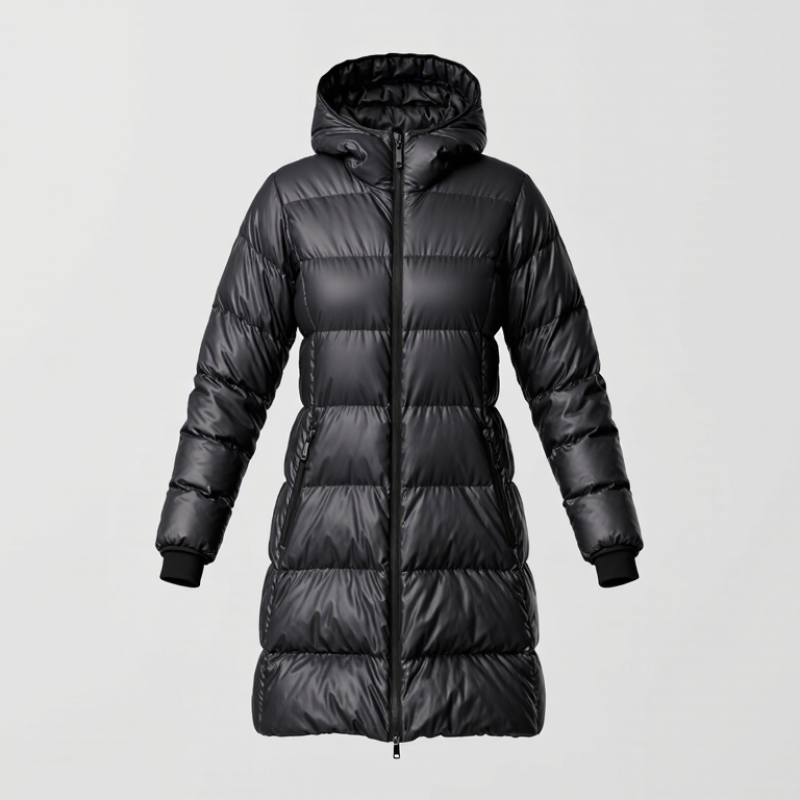
A long puffer is designed to extend warmth below the waist, where shorter coats leave hips and upper thighs exposed. Its stitched baffles hold insulation in place and reduce cold gaps, while a full-length zipper and snug cuffs help limit drafts. A hood can protect the head, but a bulky one may obstruct peripheral vision. Small detail. Longer hems also add fabric and weight, and can bunch when sitting or climbing stairs.
Fill choice shapes the jacket’s purpose. Down is light and compressible, but loses much of its insulating ability when wet; synthetic fill generally handles damp conditions better, though it may feel heavier. Textile Exchange’s 2024 Materials Market Report estimates that polyester made up 57% of global fiber production in 2023, while recycled polyester represented 12% of polyester production. This is useful context for shell and fill materials, not proof that one jacket performs better. Check the care label and construction details. A high collar may feel protective outdoors, yet rub against the chin indoors. That trade-off is easy to overlook.
A long puffer should match the cold you actually face, not the coldest day in a forecast. Note the usual morning temperature, wind, rain, and time spent outdoors. In dry, freezing weather, generous insulation and a high collar can help retain warmth. In damp conditions, check whether the outer fabric resists light moisture; “water-resistant” does not mean waterproof. Wind matters. A coat that feels warm on a sheltered street may feel different at a bus stop. Consider whether you will wear thick sweaters underneath, too, since a tight fit can restrict movement and flatten insulating layers.
Daily routines shape the right length and weight. If you walk or cycle, test whether the hem allows a long stride and whether the hood stays put when you turn your head. For commuting, sit down in the coat before buying it; some long styles bunch behind the knees or feel bulky in a car. Useful pockets should be reachable with gloves on, and a two-way zipper can make sitting easier. I once focused too much on warmth and ignored weight. By midday, carrying that coat over one arm felt like its own workout. Check the care label as well, because frequent washing or difficult drying can make a favorite coat less practical than expected.
Insulation determines warmth, but the best choice depends on how you use the coat. Down offers strong warmth for its weight and compresses easily, yet it can lose loft when soaked. Synthetic fill usually handles damp conditions better and dries faster, though it may feel heavier. Check the fill distribution, too. Thin patches near the shoulders can matter on windy walks. Warmth is not just a number.
The outer fabric affects comfort and durability. Tightly woven nylon or polyester can block wind and resist light drizzle. A water-resistant finish helps with brief showers, but it is not the same as a waterproof membrane. For wet, exposed commutes, look for sealed seams and a reliable hood. Breathability matters. Otherwise, moisture from sweat can build up inside, especially when climbing stairs or carrying a bag.
Longer coverage protects the hips and thighs, but extra length can restrict movement. Try sitting, reaching, and walking in the jacket before deciding. Check that the zipper moves smoothly over layers and that cuffs close around gloves. There is no perfect balance: a highly protective coat may feel stiff, while a soft, lightweight one may offer less shelter. That trade-off is easy to underestimate.
Comparing insulation, fabrics, and weather protection
Fill power measures how much space one ounce of down occupies, in cubic inches. Higher ratings provide more loft per ounce, but do not automatically mean a warmer jacket: fill weight, construction, fit, and shell fabric also matter. For wet or windy conditions, check the shell’s water resistance and wind protection, too.
A long puffer should cover the areas you want warm without restricting your stride. Mid-calf styles offer more coverage, but they can feel cumbersome on stairs or during a brisk walk. A knee-length cut often balances warmth and movement. Check where the hem lands when you sit, too. Try it seated. If the coat bunches behind your knees, a shorter length may work better.
Fit depends on what you plan to wear underneath. Try the jacket over a sweater, then reach forward and lift your arms. The shoulders should move comfortably, and the zipper should close without pulling across your chest. A little room helps. Too much can let cold air in. Check practical details in the same way: a two-way zipper can ease movement, deep pockets should hold a phone securely, and adjustable cuffs can close around gloves. A hood is useful in wind, though bulky ones may limit visibility. I sometimes overlook pocket placement; that small detail becomes annoying when carrying keys. Look for even stitching and insulation that feels evenly distributed, while remembering that no single feature suits every routine.
A long puffer jacket needs care that fits its filling and outer fabric. Check the care label before washing; some jackets need a gentle cycle, while others require professional cleaning. Down insulation can clump if it dries unevenly, so allow plenty of drying time and gently break up damp clusters. Synthetic filling is often simpler to maintain, but it still needs careful handling. A little inconvenient, perhaps.
Durability shows in details you can inspect. Run the zipper up and down, check that seams lie flat, and look for secure stitching around pockets and cuffs. A smooth lining helps the jacket slide over sweaters without tugging. Try sitting, reaching, and walking in it; a hem that catches under your legs can become annoying fast. None of these checks guarantees years of wear, but they can reveal weak spots before purchase.
Compare value with expected use, not just the price tag. If you wear the coat most winter days, sturdy fabric and repairable closures may justify a higher cost. For occasional use, a simpler option could make more sense. Consider storage, cleaning costs, and whether the length suits your commute. One thing is easy to overlook: a jacket that feels warm in a shop may feel bulky on a crowded bus. A trade-off, not a deal-breaker.
Down provides strong warmth with less weight, but can lose loft when soaked. Synthetic fill often dries faster in damp weather, though it may feel heavier.
Tightly woven nylon or polyester can block wind and resist light drizzle. A water-resistant finish is not the same as a waterproof membrane.
Knee-length styles often balance warmth and movement. Mid-calf coats cover more, but may feel cumbersome on stairs. Try sitting, too.
Test it over a sweater, then reach forward and lift your arms. The shoulders should move easily, and the zipper should close without pulling.
Look for a smooth two-way zipper, deep pockets, adjustable cuffs, and a hood that does not block your view. I sometimes overlook pocket placement; keys can make it matter.
Run the zipper, check the stitching around pockets, and feel for thin insulation patches near the shoulders. These checks reveal possible weak spots, not guaranteed lifespan.
Read the care label before washing. Down may clump if it dries unevenly, so allow time and gently separate damp clusters. A little inconvenient.
Consider how often you will wear it, plus cleaning, storage, and repair needs. A warm coat can still feel bulky on a crowded bus. Worth reconsidering.
Choosing the best long puffer jacket for women starts with understanding its purpose: extended coverage and insulated warmth for cold-weather comfort. Consider the climate you live in and how you plan to wear it, whether for daily commutes, outdoor activities, or occasional use. Compare insulation types, outer fabrics, and weather-resistant features to find a balance of warmth, breathability, and protection suited to your needs.
Next, evaluate the jacket’s length and fit, making sure it allows comfortable movement and room for layers. Practical details such as a secure hood, useful pockets, and easy-to-use closures can make everyday wear more convenient. For a purchase that lasts, check care instructions, construction quality, and expected durability alongside the price. A well-chosen Women's Long Puffer Jacket should suit your routine, feel comfortable in your local conditions, and offer dependable value over time.

Zhongda Wincome