Choosing the best Windbreaker Jacket for global buyers requires more than comparing colors, prices, and product photos. Weather, customer habits, shipping conditions, and retail expectations can vary widely between markets. A lightweight jacket that performs well in London may feel unsuitable in Singapore or Johannesburg.
Experienced buyers usually begin with the fabric, construction, and intended use. Check whether the shell is tightly woven, water-resistant, breathable, and comfortable against the skin. Examine the zipper, hood adjustment, cuffs, seams, and pocket depth. Small details matter. A loose cuff can let cold air enter, while a weak zipper may fail during daily commuting. Ask suppliers for fabric specifications, size charts, sample approval, and consistent production records. Independent testing can also help verify colorfastness, tear strength, and water resistance.
However, no Windbreaker Jacket suits every customer or climate. That is the difficult part. Buyers must balance performance, cost, appearance, packaging, and minimum order quantities. A premium coating may improve protection but increase the final price. A thinner design may reduce shipping weight but disappoint customers in windy regions. These trade-offs deserve honest evaluation, not optimistic assumptions. This guide explains how global buyers can assess materials, supplier reliability, customization options, quality control, and market fit before placing an order. Some decisions may still need revision after real customer feedback. That is normal, and it is useful.
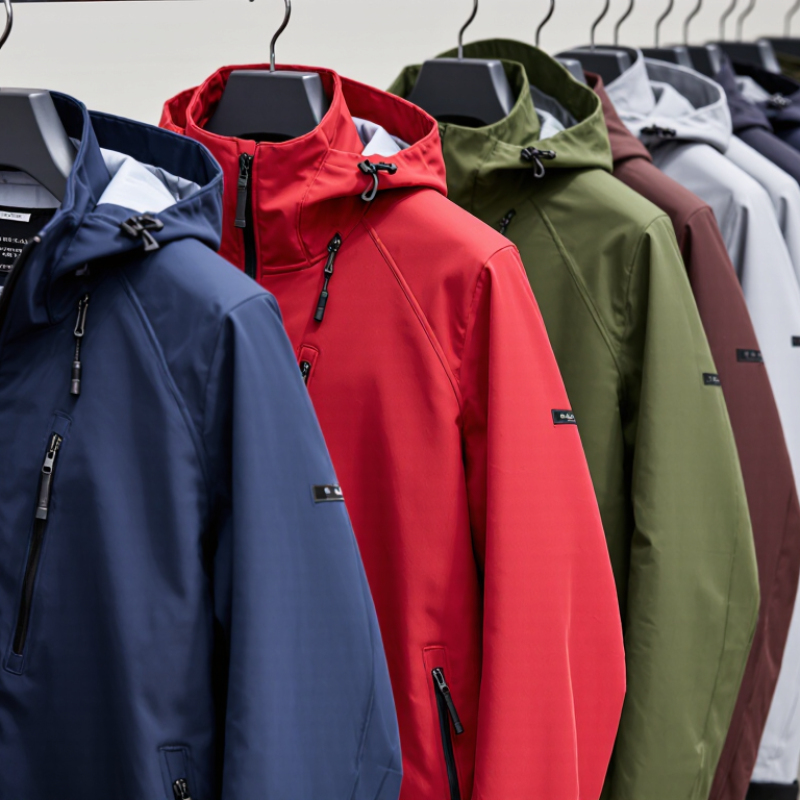
How to Choose the Best Windbreaker Jacket for Global Buyers?
Windbreakers are not one uniform product. Lightweight shell jackets suit mild, windy commutes and sudden showers. Waterproof membrane jackets offer stronger rain protection for outdoor work and travel. Insulated hybrids fit colder conditions but need more storage space. Packable designs help buyers serving airline, cycling, and urban markets.
Core performance depends on measurable details. ISO 811 tests resistance to water penetration, while ASTM D737 measures fabric air permeability. Check seam taping, adjustable cuffs, hood coverage, and zipper protection. A high waterproof rating can still feel clammy without adequate breathability. I have seen buyers focus on shell fabric and overlook pocket durability. That mistake becomes obvious after repeated loading.
Textile Exchange’s Materials Market Report 2024 reported that polyester represented about 57% of global fiber production in 2023. This makes recycled and traceable polyester important purchasing questions. However, recycled content alone does not prove long-term quality. The European Outdoor Group’s 2024 State of Trade report recorded a 2.9% decline in European outdoor sales during 2023. Buyers should therefore match insulation, color, and packability to real regional demand. Test samples in wind and light rain. Small defects matter. A hood that slips backward can ruin an otherwise excellent jacket.
| Windbreaker Type | Typical Fabric Construction | Wind Protection | Water Protection | Breathability | Typical Weight | Best Use | Key Buyer Checks |
|---|---|---|---|---|---|---|---|
| Lightweight Windbreaker | Plain-weave nylon or polyester, commonly 20–50 denier | Good protection for everyday wind and light outdoor activity | Water-repellent finish; generally not fully waterproof | Moderate; mesh vents can improve airflow | Approximately 180–350 g | Daily commuting, travel, walking and mild climates | Fabric density, seam quality, hood adjustment, zipper smoothness and care-label accuracy |
| Packable Windbreaker | Lightweight nylon or polyester, often 10–30 denier, with a storage pouch | Good when the garment is properly closed; lighter fabrics may be less durable | Usually light rain resistance through a durable water-repellent finish | Moderate to good depending on coating and ventilation | Approximately 120–250 g | Air travel, hiking, emergency layering and variable weather | Packed size, fabric tear strength, pouch durability, elastic recovery and repeated folding performance |
| Softshell Windbreaker | Stretch-woven polyester or nylon, sometimes bonded to a brushed inner layer | Very good wind resistance with greater comfort than rigid shells | Light to moderate rain resistance; performance varies by membrane and seams | Generally good because the fabric can release moisture vapor | Approximately 350–700 g | Cycling, hiking, outdoor work and cool active conditions | Stretch recovery, abrasion resistance, fleece thickness, sleeve mobility and ventilation openings |
| Windproof Rain Shell | Coated or membrane-backed polyester or nylon with taped or sealed seams | Excellent when the front zipper, cuffs and hem are properly sealed | Waterproof ratings commonly range from about 5,000 to 20,000 mm, depending on construction and test method | Moderate to high; published moisture-vapor results should include the test method | Approximately 250–500 g | Wet, windy travel, hiking and outdoor work | Hydrostatic-head result, seam-taping coverage, hood design, zipper flap and fabric coating durability |
| Anorak Windbreaker | Lightweight woven nylon or polyester with a half-length or quarter-length front opening | Very good because the reduced front opening limits exposure | Usually water-repellent; waterproof performance depends on coating and seam treatment | Moderate; side zippers or underarm vents are useful | Approximately 250–450 g | Streetwear, festivals, travel and casual outdoor use | Ease of putting on and removing, neckline comfort, pocket access, hem adjustment and size grading |
| Insulated Windbreaker | Wind-resistant outer fabric combined with synthetic or natural insulation | Very good; insulation also reduces the cooling effect of wind | Light to moderate rain resistance unless built as a waterproof shell | Lower than uninsulated styles; pit zips or two-way zippers can help | Approximately 450–900 g | Cold-weather commuting and low-to-moderate activity | Insulation weight, fill distribution, lining comfort, compression recovery and washing instructions |
| High-Visibility Windbreaker | Bright woven polyester or nylon with reflective tape or reflective trims | Good to very good, depending on fabric weight and closure design | Usually water-repellent; verify whether the garment is certified for rain protection | Moderate; mesh panels and vents are beneficial | Approximately 250–600 g | Roadside work, logistics, cycling and low-light conditions | Reflective area, colorfastness, visibility after washing, closure security and applicable regional safety requirements |
Choose fabric according to local weather, not product photos. Nylon often feels smoother. Polyester may retain its shape better. Both need testing.
No. It helps light rain bead on the surface. Check seam sealing, zipper coverage, and hydrostatic resistance for wetter regions.
Review moisture-vapor and air-permeability results. Also check mesh lining and ventilation openings. A tightly woven shell may trap heat during cycling.
Samples reveal weak seams, rough cuffs, and poor zipper alignment. Test them in light rain and strong wind. Photos cannot show everything.
Not necessarily. Lightweight fabric can reduce packing costs but may suffer during rough transport. Heavier fabric is not automatically stronger.
Test shrinkage, shape retention, and surface finish after washing. New-jacket performance can be misleading. Repeated washing tells more.
Ask about recycled fibers, water use, dyeing, and factory waste. Request records or recognized independent certifications. Attractive wording is not evidence.
Compare production pieces with the approved sample. Record color, measurements, stitching, and packaging differences. One loose thread can create an expensive return.
They provide useful guidance, but real weather may disagree. I once trusted a lightweight fabric, then found it clammy in humid testing. Small wear trials matter.
Check hood adjustment, cuff softness, zipper movement, and care-label clarity. These details seem minor. Users notice them quickly.
Choosing the best Windbreaker Jacket for global buyers begins with understanding its intended use and construction. Buyers should compare lightweight shells, insulated versions, packable designs, and performance styles according to climate and activity. Fabric selection is equally important: water resistance, wind protection, breathability, durability, and comfort should match the target market. Features such as adjustable hoods, secure pockets, ventilation panels, flexible cuffs, and practical closures can improve functionality, while accurate measurements and inclusive size ranges help reduce returns.
Quality should be assessed through stitching, zippers, fabric consistency, colorfastness, and performance testing. Sustainable material options, responsible production, and reliable manufacturing standards can strengthen long-term value. When evaluating suppliers, buyers should review production capacity, sample quality, lead times, pricing structure, certifications, packaging, and quality-control procedures. Global shipping requirements, customs documentation, payment terms, and delivery reliability should also be considered before placing an order. A well-balanced decision combines product performance, customer needs, supplier credibility, total cost, and responsible sourcing.

 Zhongda Wincome