China’s best Plus Size Men's Jackets wholesale suppliers combine practical design, stable production, and dependable quality control. This guide examines factories and trading companies serving extended menswear sizes. It considers fabric performance, pattern accuracy, order flexibility, and communication before discussing price.
Tim Gunn, fashion educator and former Project Runway mentor, once said, “Designers need to stop thinking of plus-size women as a niche market.” His observation also matters in menswear. Larger customers need proper proportions, not simply wider standard jackets. A useful supplier should offer graded patterns, reinforced seams, comfortable armholes, and sleeves that remain functional during movement.
Experienced buyers should inspect size charts carefully. A 5XL label can vary significantly between factories. Requesting samples is essential. Check the shoulder line, zipper strength, lining, pocket placement, and collar shape. A jacket may look impressive online, yet feel restrictive after ten minutes of wear. That detail is easy to miss.
This overview also considers Chinese manufacturing regions, customization services, minimum order quantities, and export experience. Certifications and transparent production records can strengthen trust, but they do not replace physical inspection. Mistakes still happen. Even a respected supplier may deliver inconsistent batches when specifications remain vague.
The strongest sourcing decision balances cost with long-term reliability. Buyers should ask direct questions, document approvals, and test samples in real conditions. Comfort must remain measurable, not assumed. That is where this market still needs improvement.
Plus size men’s jackets are outerwear designed for fuller body proportions, not simply enlarged standard jackets. The category may include sizes above a supplier’s regular range, but definitions differ across countries and factories. Chest, waist, shoulder width, sleeve length, and armhole depth must be assessed together. A larger chest with narrow shoulders can create serious fitting problems.
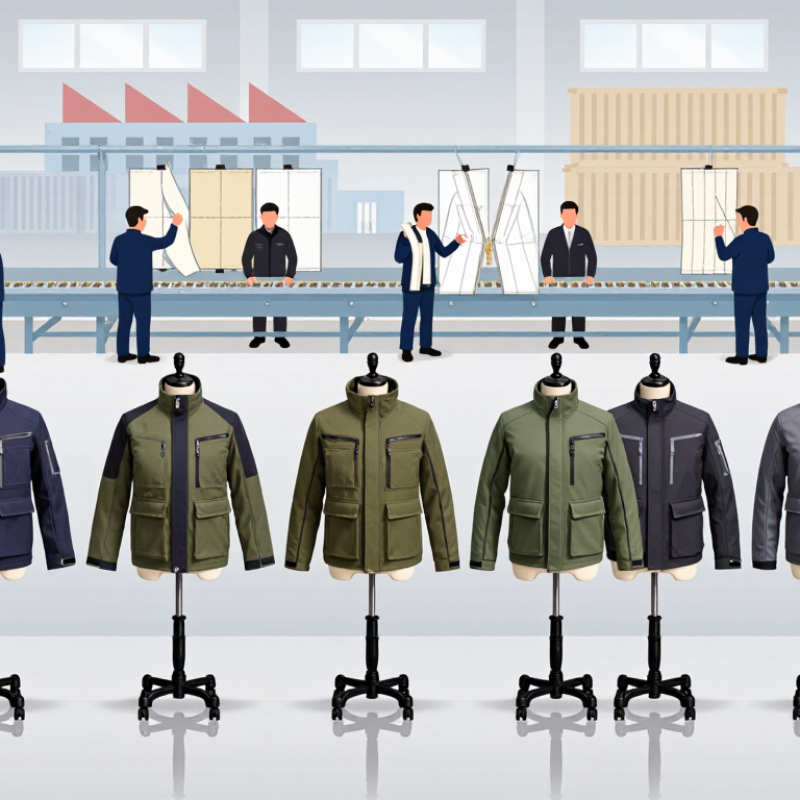
The scope covers casual jackets, workwear, insulated coats, rain shells, blazers, and seasonal outerwear. It also includes construction details such as graded patterns, stronger seams, flexible fabrics, and functional pockets. Wholesale buyers should request a complete measurement chart, fabric composition, weight, lining details, and sample photos. A real sample matters more than a promising spreadsheet.
Fit should be tested while sitting, reaching, and layering a sweater underneath. That is where many weak designs fail. A jacket may fit the chest but pull across the back. Suppliers should explain their grading method and production tolerances. Measurements can vary slightly between batches, so written inspection standards are useful. Even experienced buyers can overlook sleeve mobility or zipper pressure. That deserves a second review. Reliable sourcing also requires clear sample approval, consistent labeling, and documented quality checks before bulk production.
China’s wholesale jacket suppliers differ widely in fit, materials, and production control. For plus size men’s jackets, sizing accuracy deserves close attention. Reliable suppliers provide graded measurements from chest to sleeve length. They should show flat measurements, tolerance ranges, and clear size charts. Ask for a physical sample before approving bulk production. It may feel slower. It prevents costly surprises.
Strong suppliers offer practical fabric choices for different markets. Cotton blends suit mild weather, while padded shells support colder conditions. Check zipper strength, seam density, lining comfort, and pocket reinforcement. A good factory explains fabric weight, shrinkage risk, and water-resistance limits. Claims need testing, not attractive wording. Request pre-production samples and inspection photos. Independent quality checks can confirm measurements, stitching, color consistency, and carton packing. Still, inspections have limits. A sample cannot reveal every production problem.
Supplier communication is another key feature. Clear replies, stable lead times, and transparent minimum order quantities reduce pressure. Experienced teams discuss grading adjustments instead of forcing one standard block. Confirm payment terms, export documents, labeling rules, and delivery responsibilities in writing. Compare several quotations carefully. The cheapest offer may hide weaker fabric or unpredictable rework. I would also review recent production evidence and request references where possible. Some suppliers appear capable online but respond slowly when details become difficult. That warning should not be ignored. A dependable partnership grows through small, verified orders and honest feedback.
A dependable wholesale supplier should show measurable quality, not only attractive product photos. Request fabric composition, weight, seam samples, and wash-test results before placing a large order. ASTM D3776 helps verify fabric weight, while AATCC 135 can assess dimensional change after washing. Small tests reveal uncomfortable surprises.
Plus-size jackets need more than enlarged standard patterns. Ask for chest, waist, shoulder, sleeve, and back-length measurements in centimeters. Compare them with ISO 8559-1 body-measurement guidance, then inspect the supplier’s size chart. Measure a sample yourself. A two-centimeter error can restrict movement across the shoulders. It happens more often than buyers expect.
Material choice affects comfort, durability, and cost. Textile Exchange’s 2024 Materials Market Report estimates that polyester represented about 57% of global fiber production in 2023. It also reports that recycled polyester accounted for roughly 14% of polyester output. These figures provide useful context, but recycled content alone does not prove superior quality. Check fiber certificates, fabric density, zipper strength, lining breathability, and colorfastness. Cotton blends may feel softer, while tightly woven polyester often handles light rain better. Ask for test evidence, not promises. A supplier that accepts reasonable inspection usually inspires more confidence. Yet inspection plans can still miss poor grading between sizes, so reviewing several production samples remains necessary.
A dependable ordering process starts with a detailed tech pack. Include chest measurements, sleeve length, fabric weight, insulation, color codes, and tolerance limits. For extended sizes, request a grading chart from 2XL to 8XL. This prevents a jacket from becoming wider but not longer. Industry research supports this demand shift: Grand View Research valued the global plus-size clothing market at over USD 600 billion in 2023. That scale encourages specialized production, but quality still varies between factories. Ask for a physical sample before approving bulk production. Keep one sealed sample for later inspection.
Pricing usually depends on shell fabric, lining, padding, hardware, printing, and order volume. A practical quotation may range from USD 18 to USD 55 per jacket before freight, depending on construction and materials. The exact figure needs written confirmation. The first costing is often too optimistic. Allow room for size grading, replacement samples, and unexpected carton charges. Many suppliers quote minimum quantities between 100 and 500 pieces per color, while custom fabrics can require higher volumes. McKinsey’s State of Fashion reporting highlights continuing pressure on apparel margins, so low prices may hide weaker materials or limited inspections. Confirm payment stages, production time, inspection standards, packaging, and shipping terms before sending a deposit. A smaller trial order is safer, although its unit price may be higher. Mistakes become expensive at scale.
For plus-size men’s jackets, supplier selection should begin with measurable fit, not catalogue photos. Request a size chart showing chest, shoulder, sleeve, and hem measurements. Ask for one graded sample in a larger size. A jacket may fit the chest but restrict the upper arm. That mistake is common.
Shipping needs early planning. UNCTAD’s Review of Maritime Transport reports that more than 80% of global merchandise trade moves by sea. Ocean freight lowers unit costs, but port delays can disrupt seasonal launches. Request shipping quotes under clear Incoterms, carton dimensions, gross weight, and estimated production dates. Leave buffer time. A promised delivery date is not always a reliable delivery date.
Customization should cover fabric weight, insulation, zipper quality, pocket depth, labels, and size grading. For wholesale orders, approve a pre-production sample and record every measurement. Supplier verification should include a registered business certificate, factory address, production photos, recent inspection records, and two trade references. The World Bank’s 2023 Logistics Performance Index placed China among the stronger logistics markets, but country-level performance cannot verify one factory. Use a video call, inspect sample stitching, and compare documents carefully. I would not trust polished paperwork alone. A small paid trial order may reveal packing errors, inconsistent sizing, or slow communication before a larger commitment.
They support fuller proportions across the chest, waist, shoulders, sleeves, and armholes. A jacket should not simply be enlarged.
Check chest, waist, shoulder width, sleeve length, and armhole depth together. A wide chest with narrow shoulders can restrict movement.
Options include casual jackets, workwear, insulated coats, rain shells, blazers, and seasonal outerwear. Each style needs different fabrics and construction.
Use a physical sample, then test sitting, reaching, and wearing a sweater underneath. Check the back carefully. Sleeve movement is easy to overlook.
Request measurement charts, fabric composition, garment weight, lining details, tolerance ranges, and sample photographs. Written details reduce later arguments.
Examine zipper strength, seam density, lining comfort, pocket reinforcement, color consistency, and carton packing. Water-resistance claims require testing.
Minimum quantities may range from 100 to 500 pieces per color. Indicative prices can range from 18 to 55 US dollars per jacket before freight. Materials and construction change the final cost.
Start with a smaller trial order and keep one sealed sample. Confirm payment stages, production timing, inspections, labels, packaging, and shipping responsibilities in writing. A cheaper quote can hide weaker fabric.
China has become a practical sourcing destination for Plus Size Men's Jackets, offering a broad range of styles, fits, fabrics, and production capabilities for wholesalers. In this context, plus-size jackets should provide comfortable proportions, functional movement, durable construction, and reliable sizing rather than simply adding extra width. When evaluating suppliers, buyers should review size charts, fabric composition, stitching, lining, zippers, insulation, and sample quality. Clear measurements and consistent grading across sizes are especially important for reducing returns and improving customer satisfaction.
A successful wholesale order usually begins with product selection, sample approval, quantity confirmation, and a written quotation covering unit prices, minimum order quantities, packaging, and payment terms. Buyers should also discuss production schedules, shipping options, customization of colors or labels, and inspection procedures before placing an order. Supplier verification may include checking business documentation, factory capabilities, communication quality, references, and sample consistency. Careful comparison and transparent specifications can help wholesalers secure dependable products and build a smoother long-term supply process.

Zhongda Wincome